


From January 16 to 23, Cyclone Harry ravaged the Mediterranean. According to ClimaMeter, wind speeds increased by 15% due to human-induced climate change. According to Civil Protection, in Sicily alone, the cyclone struck 254 municipalities, causing damage estimated at over one billion euros.
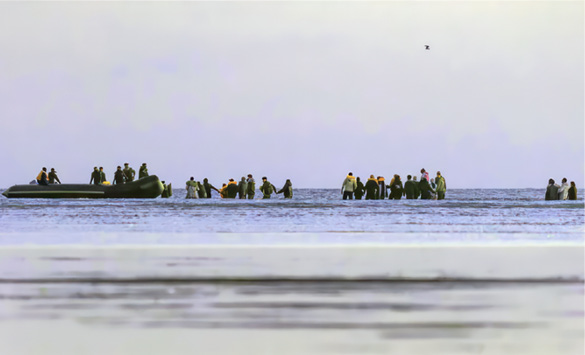
While this figure reflects the scale of the destruction, it does not fully capture the damage caused by the cyclone. Along the Tunisian coast, as the cyclone passed, the armed forces carried out raids on camps housing hundreds of refugees, forcing them to hastily set out to sea, which led to numerous shipwrecks (some 1,000 “migrants” may have died in the Mediterranean in mid-January, according to the Italian NGO Mediterranea Saving Humans – Ed.).
The responsibility lies with the migration policies of the European Union and Italy. The mainstream media’s coverage of these thousands of people was absurd, featuring reassuring headlines claiming there were no casualties. In reality, these deaths are not attributable to natural disasters or climate change: these people died because of a system that profits from CO2 emissions and the dehumanization of migrants. Sicilian beaches thus receive the bodies of those whom “they” decided to let die.
Furthermore, on January 25, the town of Niscemi suffered a devastating landslide spanning approximately 4 kilometers, forcing the evacuation of 1,500 people. Here too, the climate crisis played a role: the soil, weakened by the drought of 2024, was ravaged by the torrential rains of Cyclone Harry.
But while safety measures for the U.S. base—which occupies the Sughereta nature reserve—were implemented swiftly (via Regional Decree No. 254 of September 15, 2025), nothing was done for the residents and workers of Niscemi.
While regional institutions, including those of the “center-left,” have remained largely inactive over the past thirty years, we know that in March 2022 the president of the Sicily region, Nello Musumeci—now Minister of Civil Protection—was in possession of a document—the hydrogeological plan—outlining high risks of landslides. An investigation for involuntary manslaughter was subsequently opened against four former regional presidents, from the “center-right” and “center-left.”
But the government’s priority remains the bridge over the Strait of Messina, to which nearly ten billion euros have been allocated, rather than the preservation of the territory and the right to a peaceful life for its residents. Infrastructure, services, and soil safety, as well as the reduction of CO2 emissions, are in the interest of local populations—an interest irreconcilable with that of capital, which directs resources only where it can maximize its profits, to the detriment of the working class.
The No Muos movement continues its mobilization against the militarization of the region, in solidarity with the residents of Niscemi, to speak the truth that those in power refuse to hear. This genuine solidarity is reflected in a presence on the ground and assistance to those who lost everything in the landslide.
Cristoforo Infuso, a student in Caltanissetta (Sicily) and coordinator of Casa22, in Tribuna Libera-Jeunes (April 2026)

