


Indian Prime Minister Narendra Modi’s BJP (Bharatiya Janata Party – Indian Peoples Party) had secured 303 out of the 543 parliament seats in the 2019 elections. In addition, BJP received support from some like-minded parties thus securing a brute majority. Virtually no space was left for the opposition. Parliament norms were grossly ignored. Modi rule turned out to be autocratic. In the just concluded elections for which results were out on June 4, 2024, Modi has suffered a setback; his party has been reduced to 240 seats, 32 short of a single party majority. Even the opposition has not been able to garner 272 seats.
Prime Minister Narendra Modi is now desperately trying to cobble up a coalition government with the support of some regional parties. A coalition government is likely to change the political atmosphere in India.
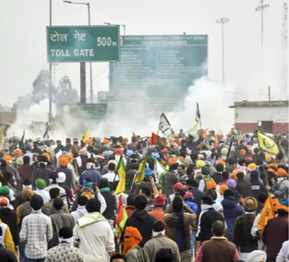
Before the election in April-May 2024, Modi had predicted that his BJP alone would win 370 seats and the parties supporting BJP would have an additional 30 members. Thus, a brute majority of 400 in the new parliament would enable him to take forward his unfinished pro-corporate agenda on the one hand and the narrow nationalist policies on the other. Among many other things BJP undertook while in power, one pertained to farmers and the other was in respect of labour. Farm laws change turned out to be a thorn; farmers’ prolonged resistance forced Modi to buckle down. Farm laws were withdrawn. Labour laws are changed but not implemented. In place of the 44 existing labour laws, BJP created four Labour Codes in favour of the capitalists without any discussion in parliament or consultation with the trade unions. Implementation of the new Labour Codes was slated as BJP’s priority after the 2024 election. BJP is now without the anticipated brute majority.
During the 2014-2024 Modi regime, India witnessed a systematic attack on farmers, workers, downtrodden, and minority communities, particularly Muslims. Many mosques and churches came under attack. Muslims were lynched in different parts of the country alleging that they were trading cows (cows are worshipped in India) and that stocks of beef were found in their homes. Modi’s rabidly rightist Hindu mongering BJP leaders boasted that in his third term as the Prime Minister in June 2024, the Indian constitution would undergo transformation as BJP and its mentor organization RSS (Rashtriya Swayam Sevak Sangh-National Volunteer Organisation) always stood against the basic tenets contained in the preamble of the Indian constitution. The preamble of the constitution spoke about liberty, fraternity, equality, secularism, and socialism to all people of India irrespective of their religion, status, caste or colour. RSS goal was the creation of a Hindu nation for which BJP was created. RSS was not willing to accept equal rights for over 200 million Muslims living in different parts of the country.
Modi’s 10-year rule took away even the limited democratic space previously available for Hindus and Muslims. Apart from this, what became evident was the concentration of wealth in a few hands and the growing misery of the multitudes. Some of Modi’s cronies became multi-billionaires.
In the 2024 election, opposition parties unitedly raised the issues of unemployment, inflation, attack on constitution and democracy, as well as attack on minority rights. This resulted in overwhelming Hindus, Muslims, farmers, workers, and youth voting against BJP.
The election, however, once again revealed that the left in India is in a pathetic condition. Because of the economic policies followed by various parties since 1990, India did not have even one working-class constituency. The new parliament will have less than 10 members belonging to the established communist parties. This too happened due to the support provided to the left candidates by some regional parties through alliance politics.
N. Vasudevan, Mumbai, June, 4th
Last minute: Modi has been elected as the leader of a multi-party coalition having 293 members in parliament. Some of the coalition partners were with BJP some years ago, went against Modi on issues of secularism, joined other outfits but have now again decided to support BJP. Modi has become vulnerable. Hatred has given place to a degree of flexibility.
 International Workers Committee - Comité ouvrier international - Comité obrero internacional