


Bassirou Diomaye Faye was elected in the first round of the presidential election with 54.28% of the vote. It was a slap in the face for the incumbent president, Macky Sall, whose candidate was swept aside, while his coalition exploded in mid-air, against a backdrop of disputes over the award of concessions for new offshore oil and gas fields. The Senegalese Socialist Party (which was part of the government, as was the « communist » PIT party) won less than 5% of the vote.
Just a few days ago, Diomaye Faye and his mentor, Ousmane Sonko, were imprisoned along with hundreds of other activists, and their party, PASTEF (Patriotes africains du Sénégal pour le travail, l’éthique et la fraternité), was banned.
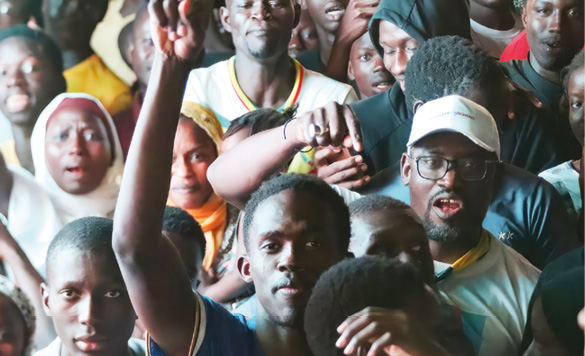
The son of a peasant who graduated from Senegal’s ENA, Diomaye Faye was a trade unionist and then leader of PASTEF alongside Sonko, and enjoyed widespread popularity, particularly among young people. The press described the presidential election as an « anti-Macky Sall referendum ». The mandate of the ex-president, who is close to Macron, was punctuated by repression that left dozens dead. PASTEF activists and pan-Africanists were jailed by the hundreds during popular revolts expressing a powerful desire for change.
Young people want to live off of their work with dignity, and no longer be forced to emigrate at the risk of their lives to illusory El Dorados. The high cost of living is hitting workers and young people hard. Students are fed up with delays in the payment of scholarships and the lack of housing. Corruption at all levels is unbearable. Inspired by events in Mali and Burkina Faso, workers, peasants and young people have seen in PASTEF a perspective for regaining national sovereignty, breaking with « Françafrique », the presence of French troops and the CFA franc – remnants of colonialism.
After his first speech, the press hailed « a reassuring speech » (Le Peuple) by the new president, who « promises a clean break and national reconciliation » (L’Express) to his predecessors, as well as to his international « partners ». Relying on a growing aspiration for « pan-Africanism », he promises a « more integrated » ECOWAS*, without however calling into question the nature of this alliance of States dominated by France. The new president has promised to fight the high cost of living, but without calling into question the international treaties that are ruining the country. He has pledged to build an « exemplary » State free of corruption, but has already rallied behind him the PDS, expresident Wade’s party, and other clique leaders fed on the crumbs left by French imperialism. A fraction of the employers support him, including the C50PN (« Club 50 % de Préférence Nationale »), hoping to increase the Senegalese bourgeoisie’s share by calling on workers to « work more ».
The result of the presidential election thus expressed a powerful desire for a complete break. But for this break to materialize in life, workers, peasants and young people will have to impose it and rely on their own strengths.
With our correspondents in Senegal
* Economic Community of West African States
 International Workers Committee - Comité ouvrier international - Comité obrero internacional